Canada’s premier shipbuilder Davie joins AEC
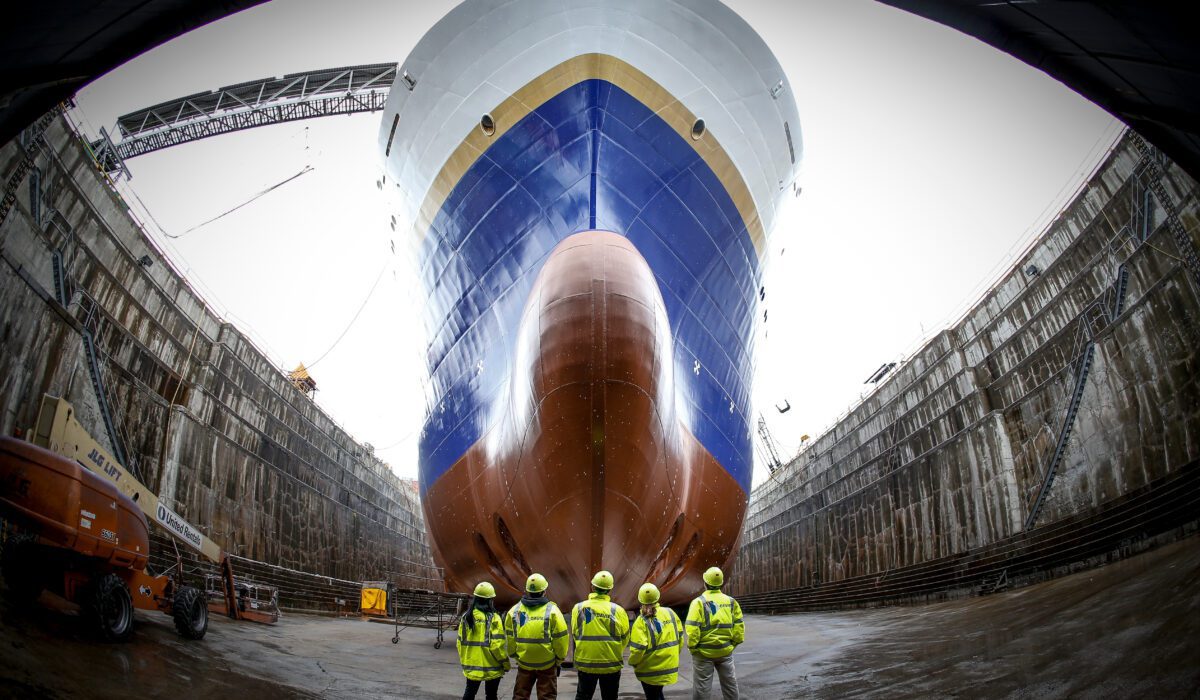
Davie Shipbuilding, part of Inocea a UK-owned international marine industrial group with operations in Canada, Finland and the United States, has officially joined AEC.
We spoke to Paul Barrett, Chief Communications Officer of Davie and the Inocea Group, about Davie’s flagship icebreakers projects and recent expansion in Finland and the US.
Could you tell us about Davie’s main areas of expertise as a shipbuilding company?
Davie is part of Inocea, a UK-owned global industrial maritime group built around a simple idea: invest in oceans – strategically, industrially and at scale.
That means investing in the infrastructure, technology and talent required to secure and operate in the world’s most important maritime domains – from the Arctic to the world’s critical trade routes.
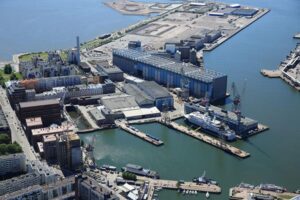
Over the past two decades the Group has acquired, rebuilt, and integrated strategic shipbuilders across Canada, Finland, and the United States. Davie is Canada’s largest and longest established shipbuilder. In Finland, Helsinki Shipyard, is the world leader in icebreaker construction and SATA Shipbuilding is a world-class steel fabricator. In the US, Davie Defense and Gulf Copper oversee two shipbuilding facilities in Texas.
We have created a unique transatlantic platform to deliver the world’s most complex, mission-critical ships for governments, and commercial customers.
Davie often describes itself as more than a shipbuilder — what does that mean in practice?
After over three decades of the “peace dividend,” Western shipbuilding capacity has been greatly eroded. Now, as great power competition in the Arctic returns, governments are moving urgently to rebuild sovereign capability, but the industrial base is constrained, fragmented, and struggling to deliver.
We have worked hard to get ahead of this shift. We are not, for example, just building icebreakers for the Canadian government, we are helping ensure sovereignty and an Arctic presence. We’re helping to project Canada’s power as an Arctic nation by making sure that they have the most strategic assets in place, at the right time and the right cost. Icebreakers are very special ships and very difficult to build at speed and scale.
What are Davie’s flagship vessels particularly designed for Arctic?
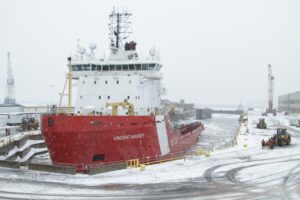
Davie, with our affiliates, has built at least one icebreaker or ice capable ships over the last 70+ years. For example, the icebreaker Voima, which has been serving the Finnish government sin ce 1954. It was built at Helsinki Shipyard and is the first modern diesel electric icebreaker. Helsinki Shipyard also delivered the icebreaker Polaris to the Finnish government in 2016. It was the world’s first LNG powered icebreaker. Today, it is still among the world’s most advanced icebreakers.
As part of the National Shipbuilding Strategy (NSS), Davie is constructing the Polar Max icebreaker for the Canadian Coast Guard. When it is delivered in 2030, Polar Max will be the largest and most powerful modern icebreaker ever delivered to the Western government. Uniquely, we are building that ship across two countries – Finland and Canada.
Davie recently expanded its operations by acquiring the Helsinki Shipyard in Finland and a shipyard in Texas, USA. What was the strategic reasoning behind these acquisitions?
Simply, Helsinki Shipyard is the world’s best icebreaker builder and our Group has among the world’s largest orderbooks for medium and heavy icebreakers. The Finns build ships more quickly, more efficiently, and more cost effectively than almost anywhere else in the world – esp. icebreakers. We had monitored Helsinki Shipyard for many years and when the opportunity to buy came, we tried everything we possibly could to secure that expertise or “snow how”, as the Finns call it, to support our Group’s icebreaker programs.
As for the Gulf Copper acquisition, we had long seen the American market as a major strategic opportunity and were waiting for the right entry point. There was growing political momentum to rebuild American shipbuilding capacity, expand the U.S. icebreaker fleet, and strengthen Western maritime capability more broadly. The ICE Pact between the United States, Finland, and Canada institutionalized that cooperation and created the framework for trusted allied collaboration in Arctic shipbuilding. Gulf Copper stood out because it offered an established Gulf Coast industrial base, a skilled workforce, and strong long-term growth potential. Just as importantly, Galveston has an excellent demographic profile and access to emerging maritime talent through Texas A&M University’s maritime programs – a critical advantage at a time when attracting the next generation of shipbuilders is one of the industry’s biggest challenges.
What should the other AEC members know about the shipbuilding?
Above all, in a world dominated by the emergence of AI, automation and digital tools, shipbuilding shows there is a growing need for people who work with their hands and with tools. Building a ship is a huge economic as well as a technical undertaking. A very large large, complex ship, like Polar Max will employ thousands of people for many years and will engage literally thousands of suppliers, offering everything from nuts and bolts to engines and complex bridge systems as well as financial services, logistics, and sustainable technologies.
Importantly, our industry connects with many industries represented by the Arctic Economic Council and we hope to be useful partners to all of them.
By being AEC member we want to learn on how we can implement new ways of doing things from best business in the High North. Our goal is to be additive rather than extractive when it comes to the Arctic as an area of great shared opportunity.