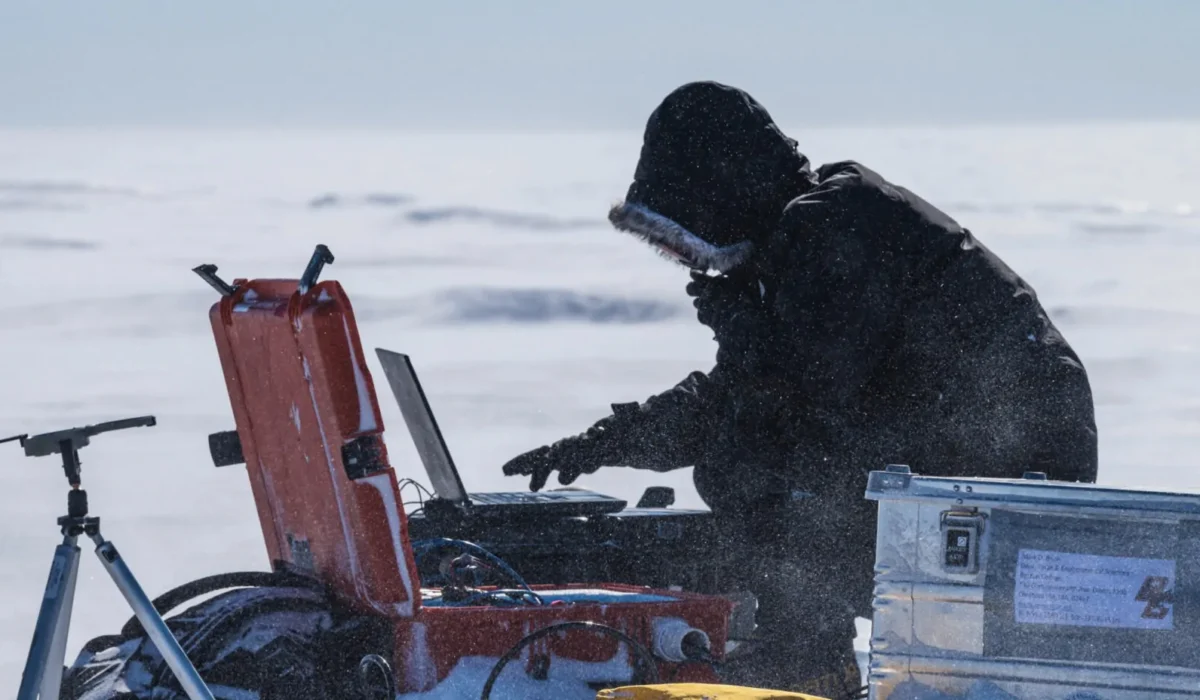
Arctic Research and Development (ARD) joins AEC
Arctic Research and Development (ARD), a technology infrastructure company from UK, has officially joined AEC. We talked to the CEO and co-founder Freddie Fennessy about how his company tackels connectivity, power, and situational awareness in the Arctic.

What does Arctic Research and Development do, and where do you operate in the North?
Arctic Research and Development (ARD) builds the technology infrastructure for operating in the Arctic: rugged hardware and software that keep people and systems connected and powered in the world’s harshest environment. Our team brings more than 50 years of combined Arctic operational experience. We develop high-bandwidth communications, extreme-cold power systems, and ice-navigation software for places where temperatures drop below -40°C and infrastructure is scarce. ARD is headquartered in the UK, with entities in Norway and Denmark and two R&D footprints in Svalbard.
What are the biggest operational challenges in the Arctic, and how do you help solve them?
Three challenges shape almost every Arctic operation: connectivity, power, and situational awareness. Communications are patchy or absent across vast areas, conventional batteries lose their capacity in extreme cold, and the lack of existing data makes it difficult to keep an accurate picture of activity across remote terrain and fast-changing sea ice. Most equipment used in the Arctic was designed for somewhere else and adapted afterwards. We do the opposite and engineer for the Arctic from the start. Our hardware delivers resilient communications and power, and our software brings critical information together to enable safer, better-informed, and faster decision-making.
What projects are you currently working on?
We focus on three core capabilities: portable high-bandwidth communications, power systems that work reliably at -60°C, and software for Arctic navigation and situational awareness. Our hardware keeps teams powered and connected for extended periods in remote locations with no conventional infrastructure. On the software side, we’ve built IceNav, a navigation and ice-routing platform for vessels in the High North. It fuses sea-ice and real-time satellite data to help operators assess route conditions, find safer passages, and adapt as conditions change.
Why did you join the AEC?
We share its commitment to responsible economic development in the Arctic. Our technology is only valuable if it solves real problems for the people who live and work there, whether by keeping remote teams connected, improving maritime safety and security, or helping operators monitor and protect critical infrastructure. A sense of stewardship for the Arctic underpins our work at ARD. For us, that means listening to Arctic communities, respecting Indigenous knowledge, and letting local priorities guide what we build and how we deploy it. We want our work to bring lasting benefits to those communities while protecting the environment they depend on.
Through the AEC, we hope to learn from established Arctic businesses and Indigenous enterprises, build lasting partnerships, and share what we have learned from developing and testing technology in Arctic conditions. We see a particular opportunity to work with other members to improve connectivity and make infrastructure more resilient across the region.
Lear more about ARD https://arcticrd.com/